Sorry we're closed

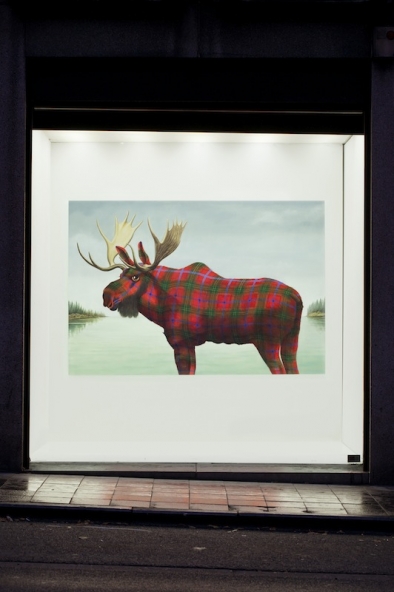
Sandwiched between Brussels' Sablon area, the Great Synagogue and the Beaux-Arts Museum complex, “Sorry We’re Closed”, isn't a traditional art gallery. Opened in April 2005 by Sébastien & Rodolphe Janssen, it’s a project room, a white cube (350 x 350 x 350 cm), an ideal blank canvas set up to welcome all kinds of installations and permutations, inviting passers-by to take a peak, even at the darkest hours of night when the neighborhood seems empty. 


Sean Landers.


Various artists exhibit their work for about a month and represent a good mix of local and international talent, all with unusual, contemporary voices. From November 8th to December 21th, it's Sean Landers turn. Coming from New York, he is best known for using his personal experience in his diverse work, so that each painting is sort of a self-portrait:


"Through the use of painting, sculpture, photography, drawing, writing, video and audio, regardless of the medium he chooses, he reveals the process of artistic creation through humor and confession, gravity and pathos. He blurs the lines between fact and fiction, reality and fantasy, sincerity and insincerity, while presenting a portrait of the artist’s consciousness. The twin strategies of personal material and formal multiplicity allow him to infiltrate his viewers’ consciousness with raw truths about contemporary society, and the art world in particular, frankly and fearlessly. A collateral effect is the viewers’ identification with the artist, which allows for a deeper understanding of themselves and their humanity."


His painting of a moose with a Scottish tartan instead of his fur is rather funny! Is the choice of this lonely animal supposed to reflect the author's feelings?


Since 2008, they opened the Gallery Rodolphe Janssen. This an exhibition space that allows the artist who invests the white cube to extend his/her exhibition. As Sean Landers does it until December 21th, so it's very good opportunity to discover worldwide artists, here in Brussels!


Rue de la Régence 65A


Inside fancy Brussels: Finger-food and violin concert


Every year, the German state North Rhine-Westphalia organizes the Förderpreis (prize for young artists — under 35) since 1957. The laureate in the Music category (among painting, film, architecture, poetry, media art, and theater) for 2012, is Christina Brabetz, an 18 year old violinist. Not surprising for the winner of the TONALi 2010 Grand Prix of Hamburg. The Landesvertretung Nordrhein-Westfalen (in German: representative office of North Rhine-Westphalia) at the European Union cordially invited some important people — read parliamentarians, representatives, NGOs or... their lucky interns — to a festive violin concert. It took place yesterday in the Theater de Vaudeville (downtown Brussels).


I was among the few non-German (speaking) persons there.


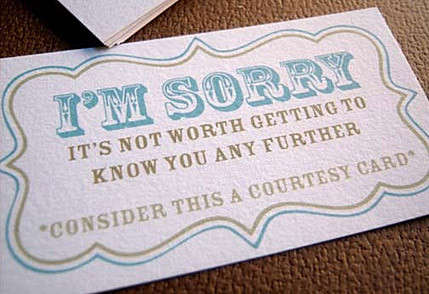
This kind of events is perfect for interns (regardless your interests: social, law, politics, etc.) to meet key persons and possibly make contact with organizations. You better come equipped and ready: suit-up (tie mandatory), bring your cartes de visite, and don't come with an empty stomach or you'll savagely jump on the ladies with the food tray. And that's rude!


Seriously, interns usually only stay between 3 to 6 months in an organization in Brussels. But what's next? Most NGOs don't have the fundings to hire them. That's why it's critical to mingle with important people dressed-up with ties. To keep you up at your highest level of social skills, there are these bottles of Champagne rosée and plenty of delicious finger-foods everywhere. I must have had like 20 of them (snacks)!


The concert itself was great! Christina felt like inspired when she was playing the violin. The marvelous theater created a cozy atmosphere in which the public intimately listened to the artist (joined by the pianist Christian Köln on the Steinway & Sons instrument) interpreting Tartini, Beethoven, Brahms & Saint-Saëns for 90mn. I'm sure my senior neighbor didn't mean to be offensive when he fell asleep. As someone said that night: 


"In Brussels, you become fat, lazzy, and unthanksful because of getting use to be served everything on a silver plate".


Anyway, really good music! The party continued with wines of the two last colors. Yet, invitees appeared rather hungry as they threw themselves towards the food. These cheese-balls were worth a fight though. A chilled atmosphere reigned until the end of this evening of leisure. Contacts have been made, lunchs have been booked, invitations sent over e-mail, interns got free food/drink; everybody got their own objectives reached.


Complain about it!


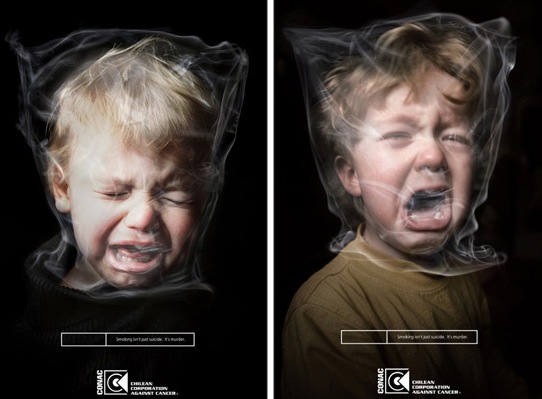
How many times have you ever heard someone complain about an advertising campaign, whether it is in the metro, in the newspaper, on TV, or whereverelse? Me, a lot. When advertisers don't respect Consumer Sovereignty (in terms of vulnerability, information and choice), the advert could be shocking for ethical reasons (stereotype, vulnerable target group, controversial image, offensive ad, playing with people's fear, misleading, manipulation, false promises, wrong information, etc.). Let me tell you what Belgians can do:


Complain about it


to the Jury of advertising ethics (in French: the Jury d'Ethique Publicitaire - JEP) in Brussels, Belgium. This self-regulating organ (advertising and marketing self-regulation is a system by which the advertising, marketing, agency and media industry set voluntary rules and standards of practice that go beyond their legal obligations) of the Belgian advertising sector was created in 1974 by the Advertising council (Conseil de la Publicité) whose members are advertisers, communication agencies and media.


"To get the customers' trust, the ad must be healthy and responsible". JEP 


The JEP is actually responsible for reviewing advertising messages in the medias, so that they comply with the rules of advertising ethics, which are based on laws and self-regulatory codes. It has a twofold mission:


  1. It investigates complaints from the customers themselves (us) filled on their website or by postal mail, and not from companies or organizations with commercial purposes.

  2. It deals with requests for advice which are freely submitted by advertisers, communication agencies and media.


The  Commission on Marketing and Advertising from the International Chamber of Commerce (ICC), which meets twice a year and examines major marketing and advertising related policy issues introduced a Code of Advertising and Marketing Communication Practice in 1937. This self-regulation has served as the foundation and cornerstone for the codes of most self-regulatory systems around the world. It also promotes high standards of ethics in marketing, which something I think is important to regulate. Unfortunately, it seems quite hard to keep up with new practices.


In countries with self-regulatory systems, e.g. the JEP in Belgium, the public can complain about an offensive ad. It is the only thing one can do to have it banned of the streets for good ;)


However, some companies use shocking ads to make people react. And it works! I'd say that advertising and marketing communications can be used to something else than making profits with false arguments.


TOTEM - Franky Verdickt @ A&Gallery


A&Gallery

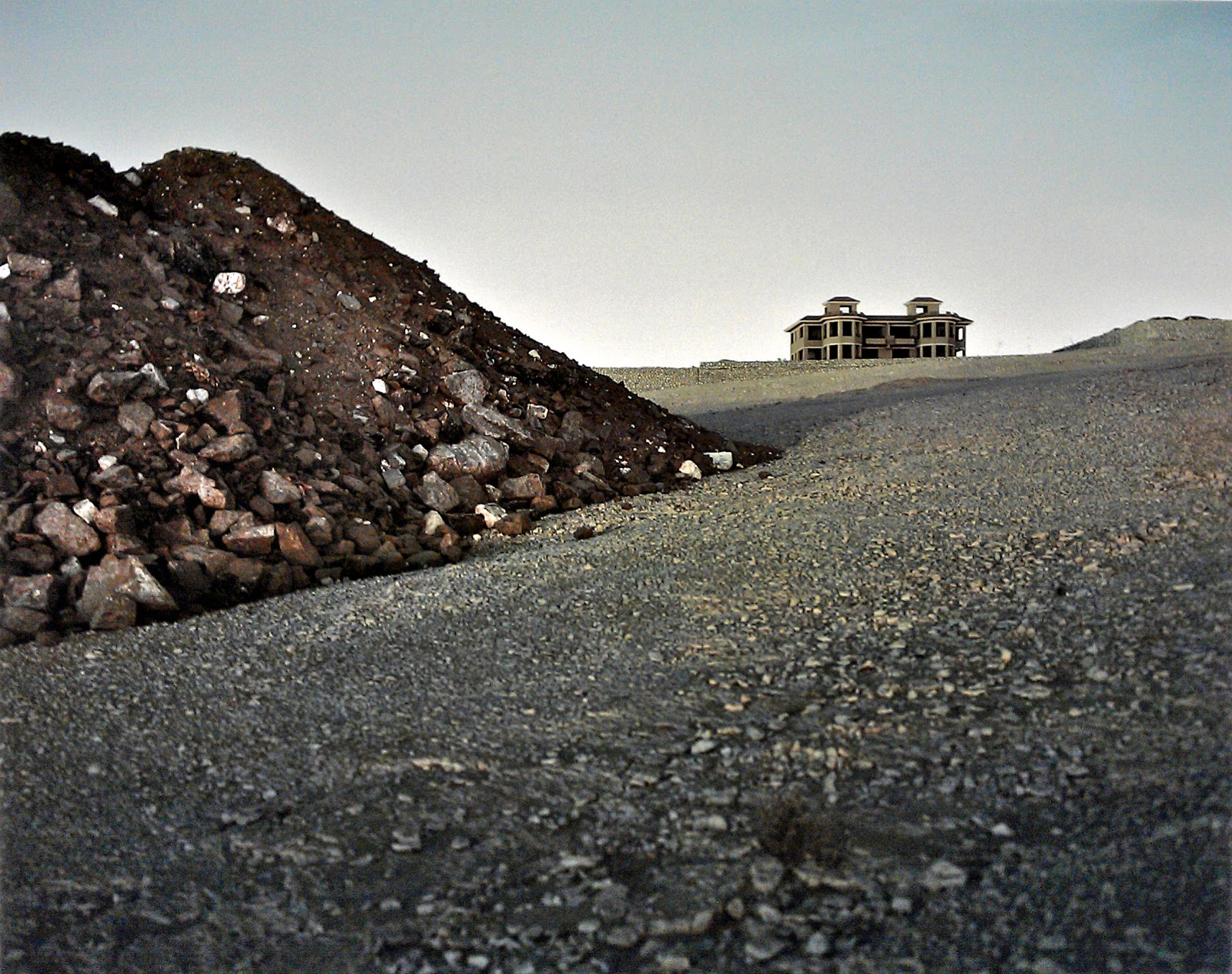
Photo © Franky Verdickt


Since I discovered Angels & Ghosts Gallery in Ghent, I follow their diverse activities. Aside from photo exhibitions, the gallery owners Wouter Van Vaerenbergh and Ben Van Alboom publish the newspapers Not Another Graphic Designer and The A&Gazette (already 4 editions). A month ago, Elisabeth Ouni was exhibiting 'A Polaroid Story', which I really liked. Now, A&Gallery hosts Franky Verdickt.


Franky Verdickt is a photographer based in Brussels, who graduated in 2007 with a Master in Photography (with honors) from the school of visual arts Sint Lukas Brussels. The same year, he traveled to Amsterdam to receive the prestigious Photo Academy Award. In July 2007, he joined Photolimits — a Belgian based platform for documentary photography. Five years of exhibitions in Beijing, Paris, Madrid and Copenhagen: Franky Verdickt is now exhibiting 'Totem' in A&Gallery, a project way more engaged than documentary photography!


Here we live.

Photo © Franky Verdickt


‘True, but I really can’t be bothered with labels. I like taking photographs – and that includes experimenting with different styles and techniques. I guess it’s like being able to speak more than one language. I’m sure some people are perfectly fine only speaking Dutch for the rest of their lives but I also like to communicate in French or English. I look at photography in the same way: one minute I’m shooting construction workers for a documentary project, the next I point my camera in a different direction to take a photograph for Totem. I feel it’s okay for a photographer to do that. In fact, I wish more photographers did. A lot of them are just tak- ing the same pictures over and over again – not even slightly embracing the possibilities photography has to offer but calling themselves artists nonetheless. Seriously, for photography to be art, you’re required to do something with it.’


 Franky Verdickt

source: A&Gazette Vol. II, n.2


Real Estate Paradise.

Photo © Franky Verdickt


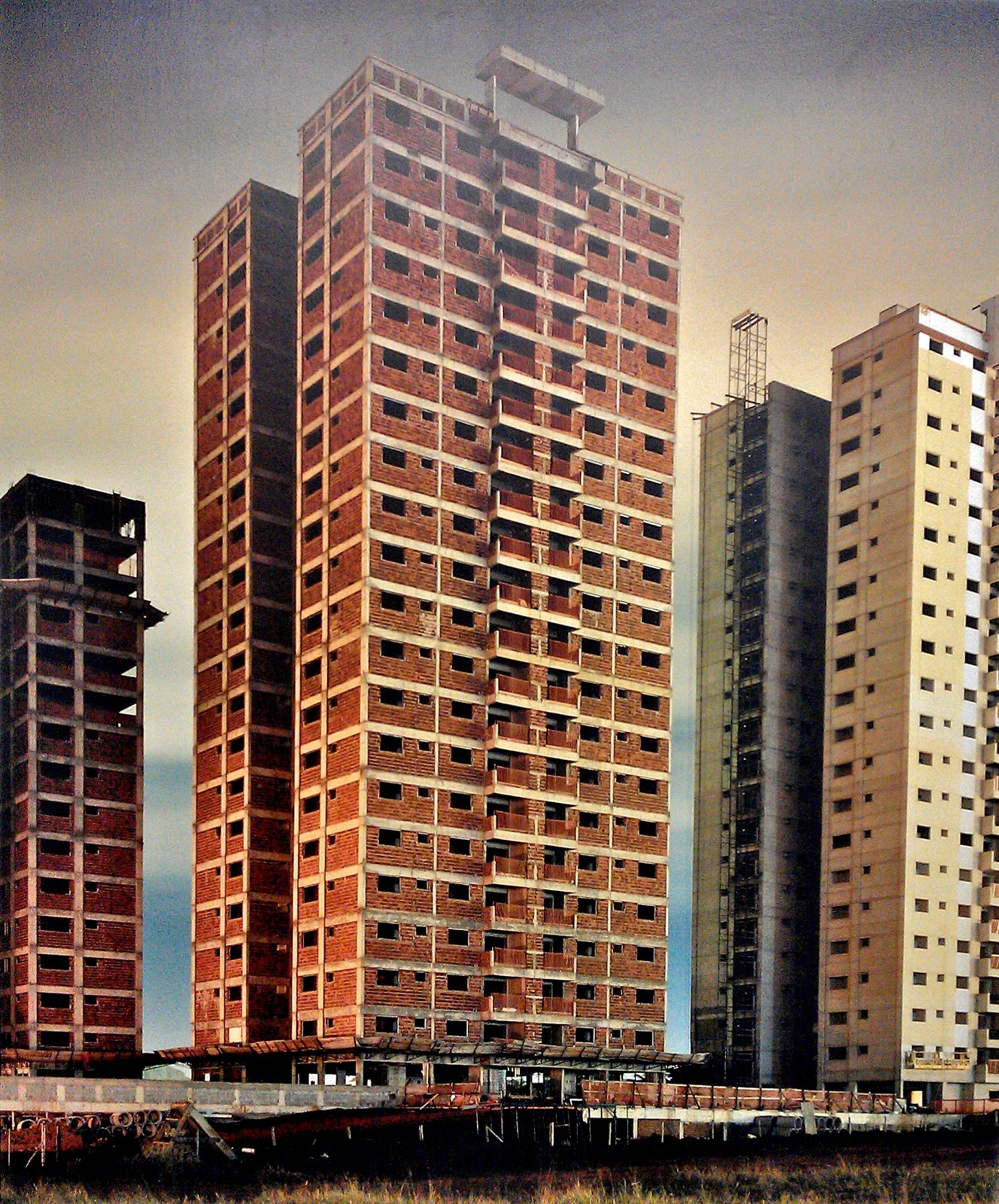
For his project, the photographer went to China, Egypt and Brazil over 3 years, pursuing his obsession with how people build homes:


‘I find it fascinating how our lives are so gravely effected by the place where we live yet a lot of people rely on big developers to build them a house or an apartment. Oh, but don’t worry: the brochure said the new place will be so you and I guess a lot of those houses and apartments actually do have everything a person requires. So how come they feel so cold and empty?

Take the hutongs in Beijing per example: one day you’re living in a community where everybody knows your name, then the government forces you out of your home to build an enormous apartment building where you get to spend the rest of your life not knowing anybody. True, you got a new house — nice and clean; and let’s not forget there’s air-conditioning — but often there’s a huge difference between a house and a home.’


Franky Verdickt 


source: A&Gazette Vol. II, n.2 


The Pastoral Living.

Photo © Franky Verdickt.


Don't be mistaken then: a home is not a house. 


Totem emphasizes a global reality today. Real estate businesses (both public and private) are throwing people our of their own homes, to put them in a new house. On the long-term, these new residential buildings are more expensive than their former homes because of multiple reasons (augmented services which the new residents never asked for). Eventually, they have to move out of their new house, leaving their spot for richer people.


Homeless in their house.


Who is responsible then: the governments? the real estate agencies?


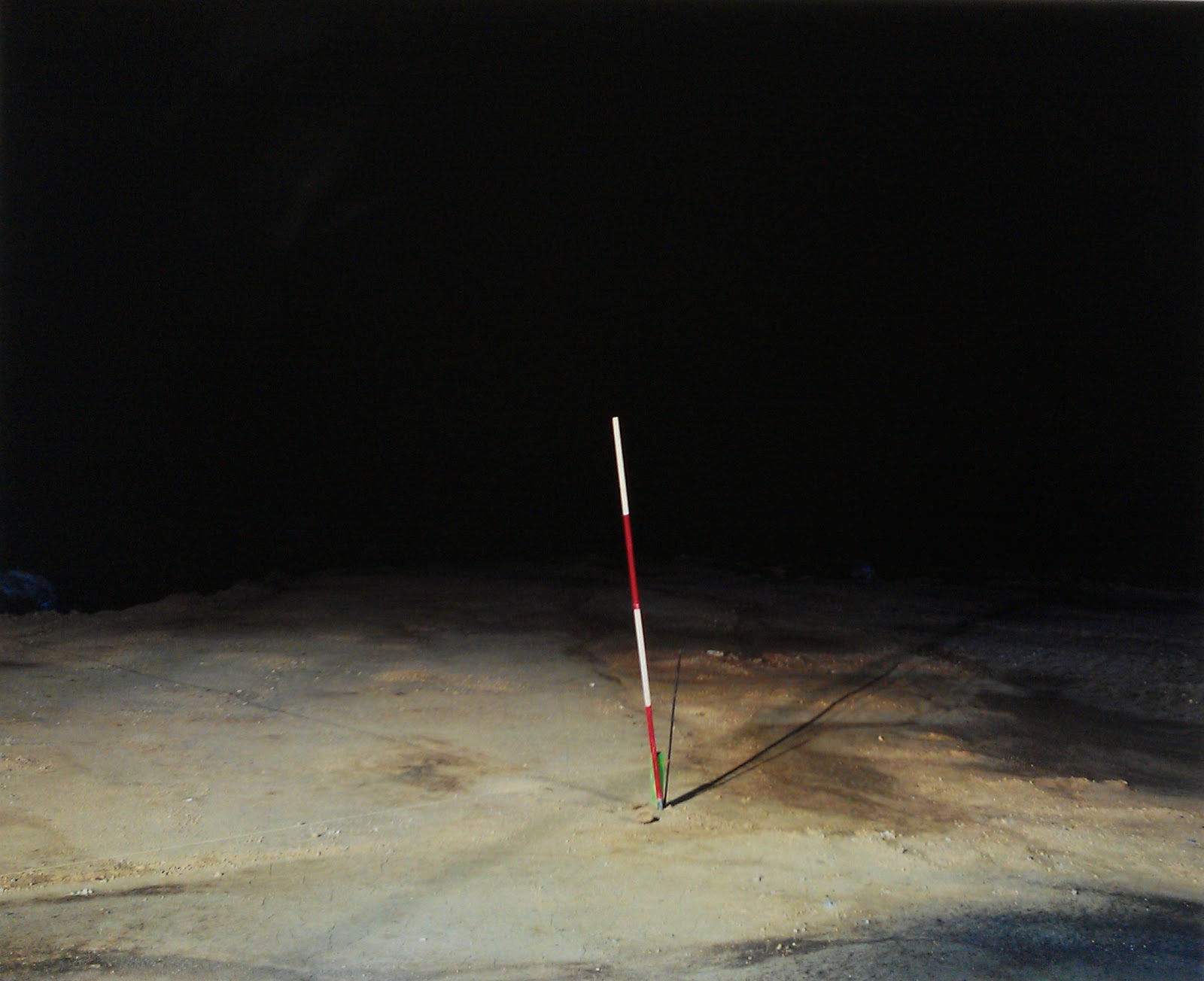
Totem.

Photo © Franky Verdickt.


All exhibited prints are for sale; signed and numbered by Franky Verdickt.

- See A&Gallery staff for more information or send an email to email(at)angels-ghosts.com.

From November 8th until 24th, 2012 (11am - 6pm) at Schepenhuisstraat 17, 9000 Ghent.


Photo exhibition: MONTAGUE & CAPULET - The triumph of feelings by Ava Llorente


The gay and lesbian rights in France is an ongoing debate. It seriously became official last week with the Same-Sex Marriage Draft-Bill, supposedly put to Parliament in January 2013 (this 3 months period might be extended if the public debate is still strong in early 2013). However, in Belgium the same-sex marriage is legal since 2003 (becoming the second country in the world to legalize it at the time)! Two countries geographically close but culturally separated by a ten-year gap?


Belgian LGBT (Lesbian, Gay, Bisexual, Transgender) associations organize a bunch of various activities throughout the country. In Brussels, the Rainbow House provides information and a café open to all to meet in a warm atmosphere for the French and Flemish speaking communities in the capital. One of their initiatives is a photo exhibition called Montague & Capulet - The The triumph of feelings.


Title obviously inspired from Shakespeare's Romeo & Juliet tragedy, the exhibition takes place in the FNAC Brussels, Avenue de la Toison d'Or, from November 9th to 30th, 2012:


I flew over these walls with the light wings of love. Stone walls can’t keep love out. Whatever a man in love can possibly do, his love will make him try to do it. - William Shakespeare.


I got interested in this exhibition because it aimed to capture the daily life of homosexual couples in Brussels. On the second floor of the FNAC (Toison d'Or), there was 20 pictures on the walls. There weren't much people but I really liked the work the artist Ava Llorente has made.


More than 400 years have passed since Shakespeare wrote these lines, but contrary to what one might think, the walls he evoked remain intact for many people around the world.According to their country, they risk imprisonment or even the death penalty. They are discriminated against, humiliated, persecuted, beaten, raped and murdered. Their only crime in the eyes of society and eyes of the state: to love someone of the same sex.
In Europe today, being gay is not a crime. The Netherlands and Belgium were the leaders in the fight against homophobia. However, do not think that one can live with his love without having to hide: homosexuality remains among the old taboos having a hard life. This is not because the law prohibits discrimination on grounds of sexual orientation that people minds are changing at the same pace.

Even today, two men or two women holding hands in public are sufficient to hear comments fusing. Stupid sex remarks in the best case, physical attacks or insults in more severe cases. And sometimes the irreparable. 


However, these people want nothing more than to live their lives peacefully and live their love. Two soulmates who have found each other and want to share their daily lives. Nothing more simple, nothing more than natural.


This exhibition aims to share with you, moments of the daily life of these lovers. Daily life impregnated with concerns and aspirations that we all share: to live with a loved one, to build its nest, a lifelong commitment. In short, nothing could be more normal for two people who love each other. Except that this morality is - for now - inaccessible for millions of people around the world.


The wings of their love unfold as it will pass through the walls, until the day when these limits are no longer stone.


Ava Llorente


Bruno and Thierry have

taken

the plunge and

 moved in together. 


It only needed a few finishing touches like flowers for their new home.


It's been 6 years Patrick and Jacques live together.
Some habits are installed in their daily lives.
This is in turn, for example they choose the music they listen to at home.
Patrick has a degree in Japanese energy healing,
which is very nice for Jacques who can enjoy professional massages at home.


Raped by boys of her village in Senegal and then beaten by the man to whom she was married by force, Aminata took refuge in Belgium. She met Thiony who is expecting papers. Taking from their love the force needed to move on, they hope to begin a new life in Europe. To prepare Aminata has resumed her studies. By fear, the two women asked not to mention their real names.


Both Fatou and Diagne have fled their home country, Senegal, and met in Belgium. Still waiting for papers, they are forced to live in poverty. If their asylum application because of homosexuality is rejected by the judge, they will be forced to return to their country. A country which punishes homosexuality with sentences of five years in prison and where homosexuals are subject to rejection and violence on a daily basis.


Would that mean that some Belgian minds didn't change yet even though the law prohibits sexual-orientation discrimination since 10 years? Apparently yes. But you can't force people to think. Hum, this 10-years gap again! We're all human after all. This exhibition puts the light on a fight that's far from over: LGBT rights in Europe. France, you're next. Thanks to Rainbow House and Ava Llorente.


Check out the exhibition yourself within 2 more weeks!


Belgian cuisine: Fritkot Festival in Brussels


Photo © Tony Le Duc


I told you already, the fries business is serious in Belgium. No wonders why there are so much 'Fritkots' (of 'Friteries') in Brussels. Cravers can even get an app to find the best 49 Fritkots in Brussels! But there is more to it...


Brussels' year-long food festival is as ambitious and wacky as the name – Brusselicious – suggests, with events taking place everywhere from a gourmet tram to a restaurant suspended above the city, not to mention a tour of the best frites in town.                                         


John Brunton, The Guardian.


Why the Belgian chips, miscalled French fries, are better than anywhere else? Probably because it's a passion. And also because they're prepared in a very specific way:


- Use Bintje potatoes;

- hand-peeled & -cut them into sticks (size? about the girth of a lady's finger);

- use 100% beef fat;

- fry them at 160°C until they're pale but cooked through;

- leave them to drain and cool down;

- re-fry at 175 °C until golden and crispy.


Brusselicious Cone + 1€ = Fries.

Photo © EDanhier


With Brusselicious 2012, the Brussels-Capital Region has decided to showcase every step of the gourmet journey — from product ingredients to the finished delight on our plate. That's why they organize different events as the Fritkot Festival from November 1st until December 4th 2012.


This is a celebration of the Belgian product that the Frenchies love so much that they even try to make it their own. Anyway, by picking up an empty cone in one of the VisitBrussels tourist offices or getting one through street-marketing in airports, train stations or traffic lights; the consumers can then go to one of the 20 participating fritkots (see map below) and get the cone filled with fries for 1€.


The reward: a giant cone of legs.

Photo © VISITBRUSSELS


People often queue up there, mouths watering in anticipation, before finally getting hold of their paper cones overflowing with golden, salted and crispy fries. Of course, they often add a large dollop of sauce. The first bite is followed by a blissful silence, which speaks volumes for the quality of the occasion. 


The point is also to vote for the best fritkot in Brussels, which will then be awarded a weird cone full of people legs. Kinda conceptual. But it might serve as a eye-catching attraction for the lucky fritkot. Each voting consumer has a chance to win a party for him/her and 20 friends at the winning fritkot ;)


FRITERIE MARTIN


For me (and the Lonely Planet), one of the best fritkot in Belgium was Fritland. But it isn't participating in the festival. So, I wanted to try out the Friterie Martin, supposed to be nearby my flat, at Place Saint-Josse. It is a very famous institution created in 1931, which Martin Aspers took over in 1970...until he closed down in 2009 (the poor man was 70 years old), which created a shock for the locals. The thing is that he was pealing his bintje potatoes himself, giving his fries a golden color and a crispy and podgy taste, but never too salty! Eventually in 2011, Zoila Palma Altamirano, a 37 years old Ecuadorian woman (moved in Belgium in 2003) fulfilled all the specific requirements (appropriate training, type of oil and potatoes used, the accompaniments, etc.) of the paper posted on the fritkot by the Saint-Josse Municipality which wanted to keep the Friterie Martin open, as it is considered a Saint-Josse tradition (source: Lalibre.be).


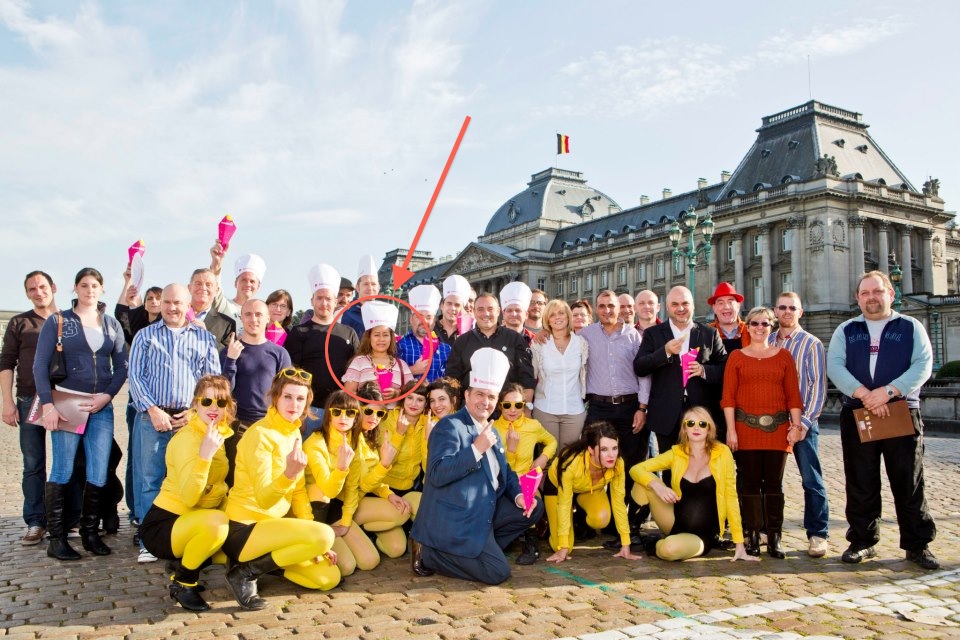
Palma and the other participants for the launch of the Fritkot Festival.
Oct. 23rd, 2012 - Place Royale. Photo © EDanhier

However, if you look for Friterie Martin on the Place St-Josseplein as stated on Brusselicious website, you won't find anything but Friterie St-Josse - Chez Palma. Here she is! Palma, serves her fries with other accompaniments (as the traditional frikandel) to the people used to the old Martin. One night, I finally went there with a big hunger! I was delighted.
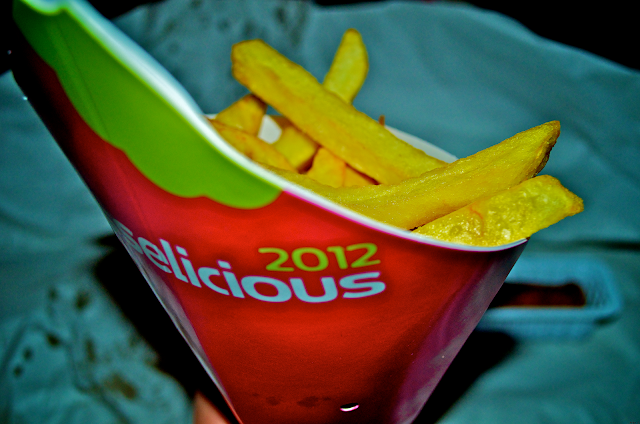


Fries from "Chez Palma".

Although it was cheap, it tasted really good. And Palma was really nice! She made the waiting time a bit shorter than usual. Of course, she uses sauces from the famous quality brand "La William", as lots of other fritkots. As a good neighbor but mostly because it deserves it, I voted for Friterie Martin, alias Chez Palma (it's becoming harder and harder to follow, right?) for the best fritkot ;) I wanna go back there with 20 friends!


Obama should pay a visit to one of the 5,000 Fritkots in Belgium?


A grey day on the Belgian coast: Nieuwpoort seaside


Because of a day-long seminar on Human Resource Management in a hotel in Nieuwpoort, I had a chance to discover a bit the Belgian coast. Eventually, there's not much to say! I mean, have you ever heard of the Belgian beaches? Me neither. Only Belgian citizens enjoy the summer season there...


The Flemish coast is rather small (65km long) and counts 13 resorts: Nieuwpoort is one of them. However, its marina called Eurojachthaven can host 2,000 boats which makes it one of the biggest in Northern Europe! It's also "famous" since the WWI where the Yser river was used as an obstacle against the German army.


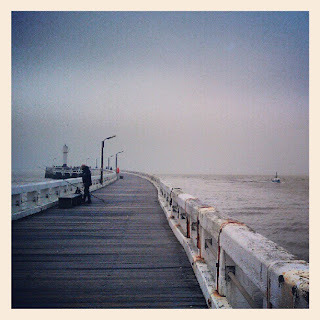
Nieuwpoort-Bad: Beach & pier.


I took a walk on the empty beach. There was a fog and a light wind, but no rain. A weather like Brittany, France :) But the landscape wasn't as good as my home region! There was an endless line of residential buildings all over the coast. Ugly concrete bar! I went to talk to some fishermen on the pier...


Nieuwpoort-Bad: Beach & residential buildings.


They weren't successful. Just a passion for them. A 2h window of fresh air, a few days a week. Indeed, the boats and professional fishermen with nets take everything out of the sea. The only things left are the mussels to pick up at low tide.


Nieuwpoort-Bad: Entrance of the marina.


I don't think Nieuwpoort is a must-see on a visit to Belgium. But how can I say that after a short walk on the beach? A solution would be to visit Ostend or Knokke, and make a pit-stop in Nieuwpoort in between! These two other cities are way bigger ;)


So yes, 


all of these pictures,


they're from my phone. 


Sorry for the quality.